

The universe through touch
— An inclusive astronomy workshop at Miyagi University of Education —
On November 8, 2025, we held an inclusive astronomy workshop at Miyagi University of Education for visually impaired children and their families. The event was organized by the "Jump to Science" executive committee and co-hosted by NPO Curascopium, with 30–40 participants on the day.
A "touchable solar system" born from NASA data
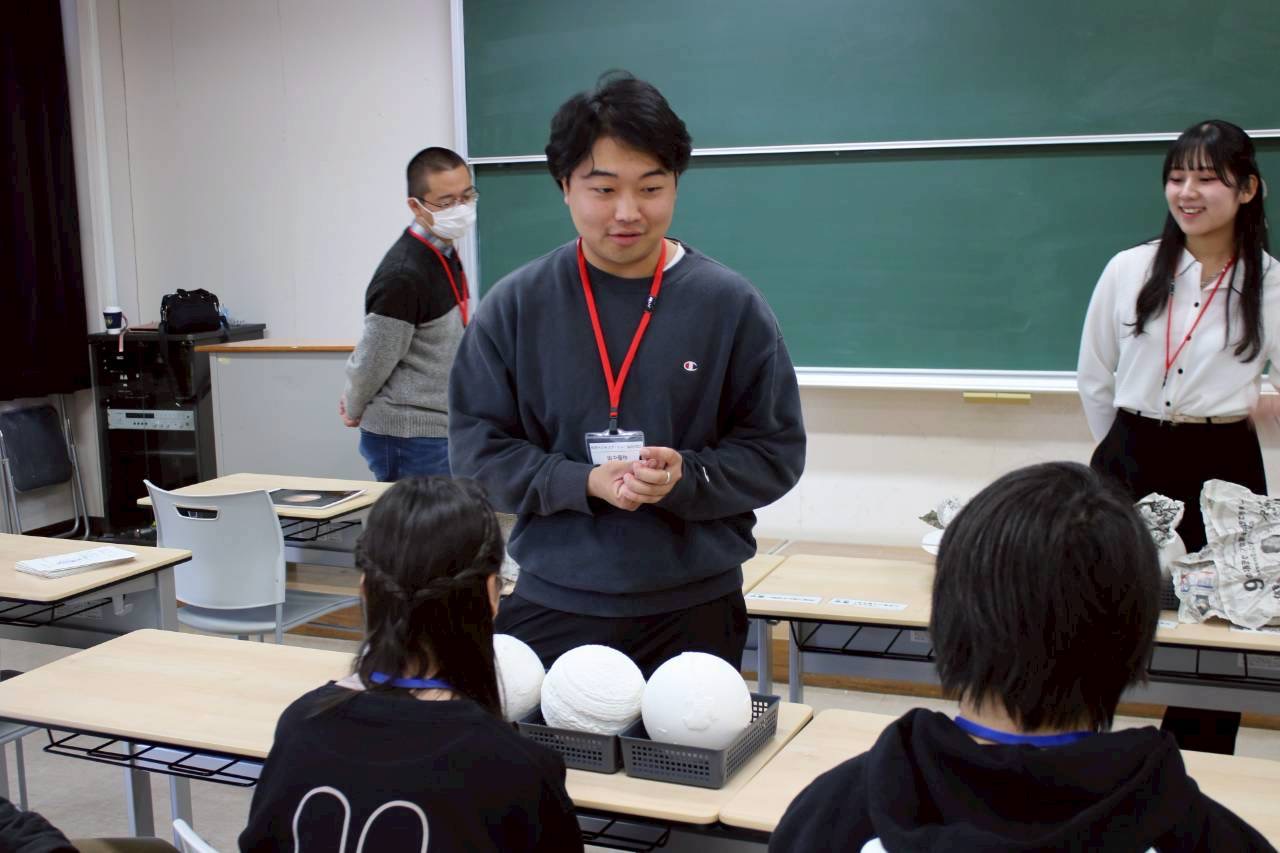
At the heart of the workshop were tactile models of ten celestial bodies: the planets of the solar system, Pluto, and the Moon. They were produced with 3D printers at about 15 cm in diameter, based on publicly available NASA data. Because the surface relief of each body is reproduced from the data, participants can feel the features of the terrain concretely with their fingertips.
A defining feature of this workshop is that the models are designed not as "materials that explain," but as "catalysts that create dialogue."
Communicating without sight
Using the models, we designed an experience that visually impaired and sighted participants could take part in together.
Visually impaired participants used their sense of touch as they usually do, while sighted participants wore eye masks to block out visual information.
Participants then described the features of a celestial body to their partner, relying only on what they felt through touch, and explained which body their partner was touching.
With diverse ways of seeing in the room — sighted, low vision, blind, congenital and acquired — the act of "conveying only what you touched" went beyond simple knowledge, becoming a chance to notice how differently others feel and perceive.
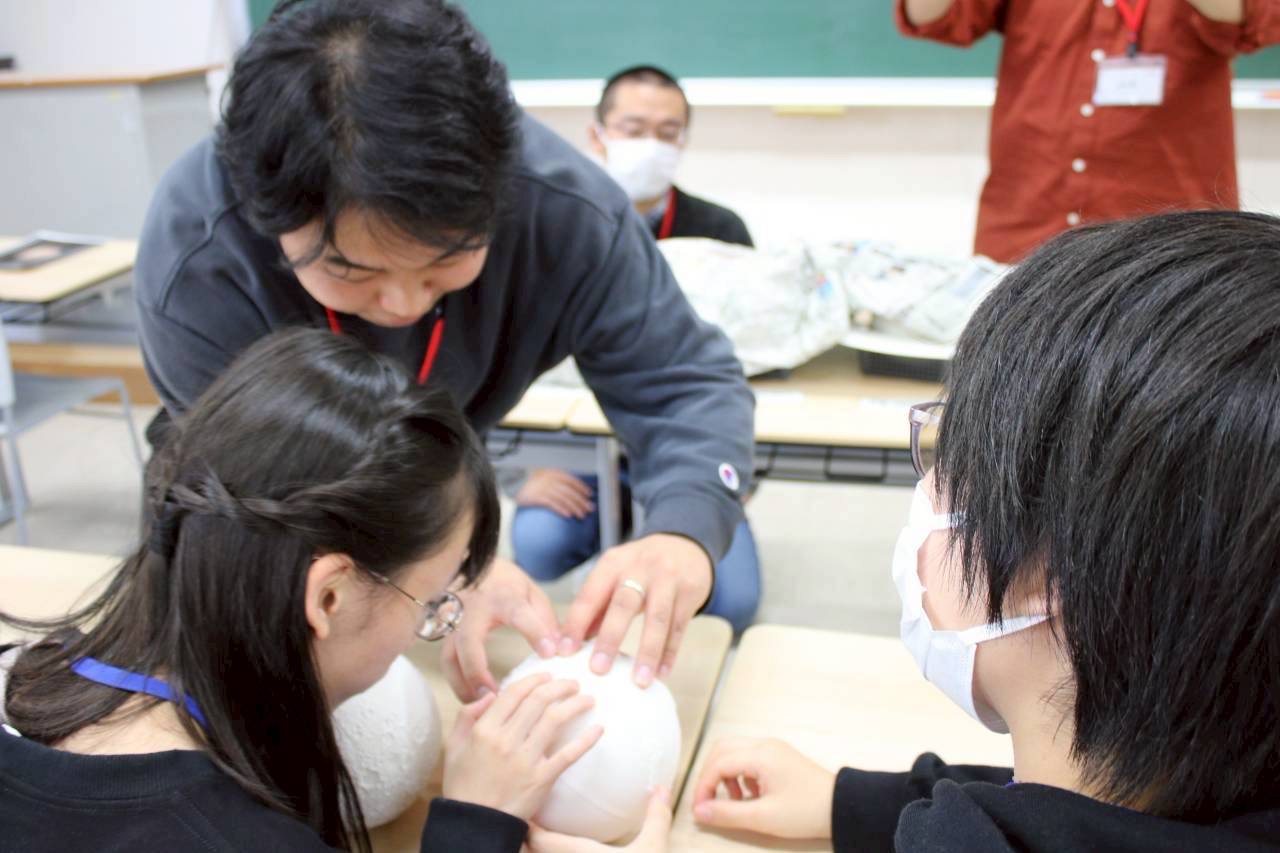
A relaxed atmosphere that made learning feel safe
The workshop was run not as a class or lecture, but in a conversational style with plenty of casual chat. Participants could touch the models at their own pace and put their impressions into words without tension.
The children clearly enjoyed themselves throughout, experimenting through natural conversation with how to convey and how to receive.
This atmosphere where it was safe to get things wrong underpinned a space where differences in perception and expression could be embraced.
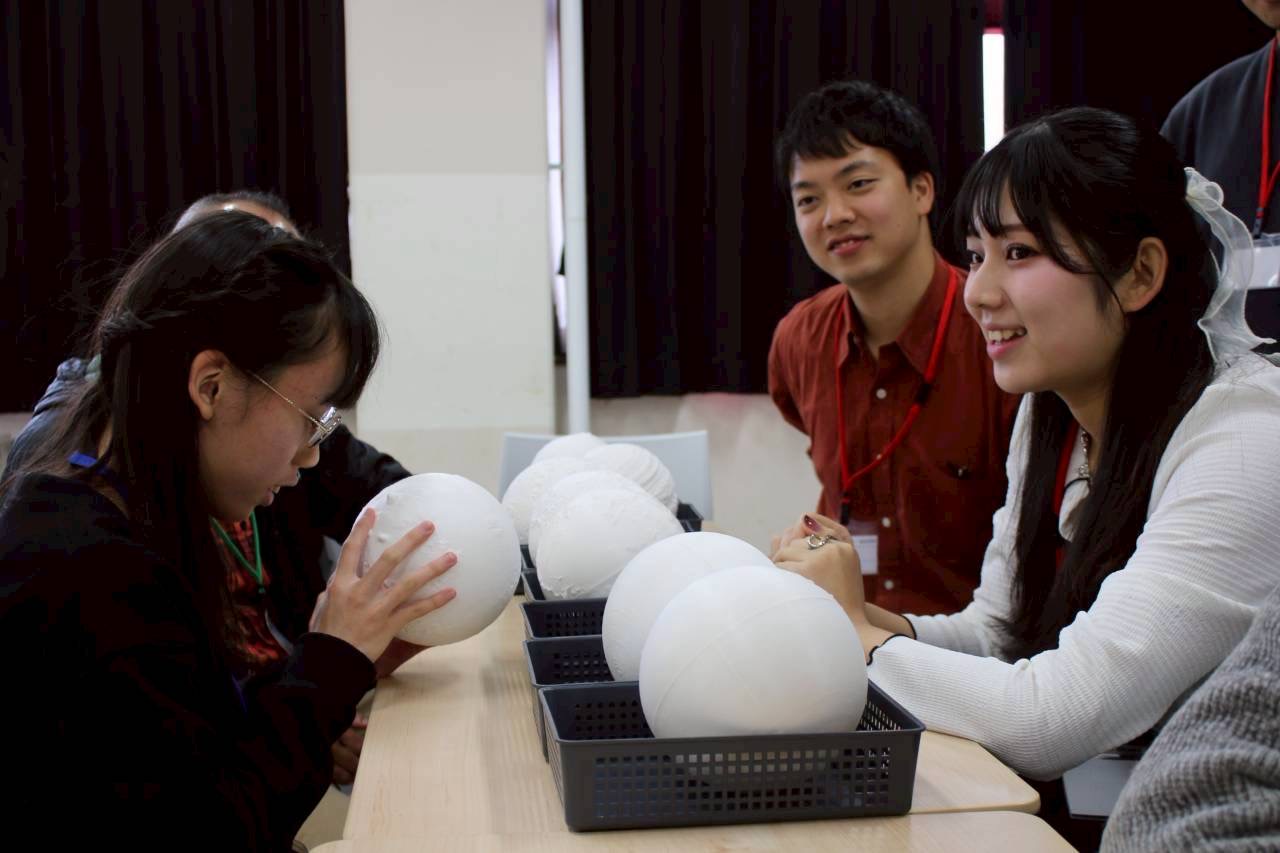
Learning that deepens with repeat participation
Some children take part every year, and some families have joined multiple times. With continued participation, the way they grasp the models and use words gradually changes, and their learning visibly accumulates.
That the workshop has taken root as a family-friendly format in which sighted and visually impaired people participate together is one of its major outcomes.
Curascopium's role, and what comes next
In this workshop, Curascopium was responsible end to end for:
- producing the tactile models
- designing the workshop as a whole
- facilitation and explanation on the day
This practice gave us confidence that the format can travel beyond the "Jump to Science" framework to other regions and venues. We aim to run similar workshops at schools, science museums, and community events, spreading the circle of inclusive astronomy education across Japan.
Creating places where anyone, regardless of sight, can touch the universe and talk about it — this workshop was a meaningful step toward that goal.