

An interactive viewing workshop enjoyed without looking
— Sharing the universe through touch, sound, and words at the "No-Look Museum" —
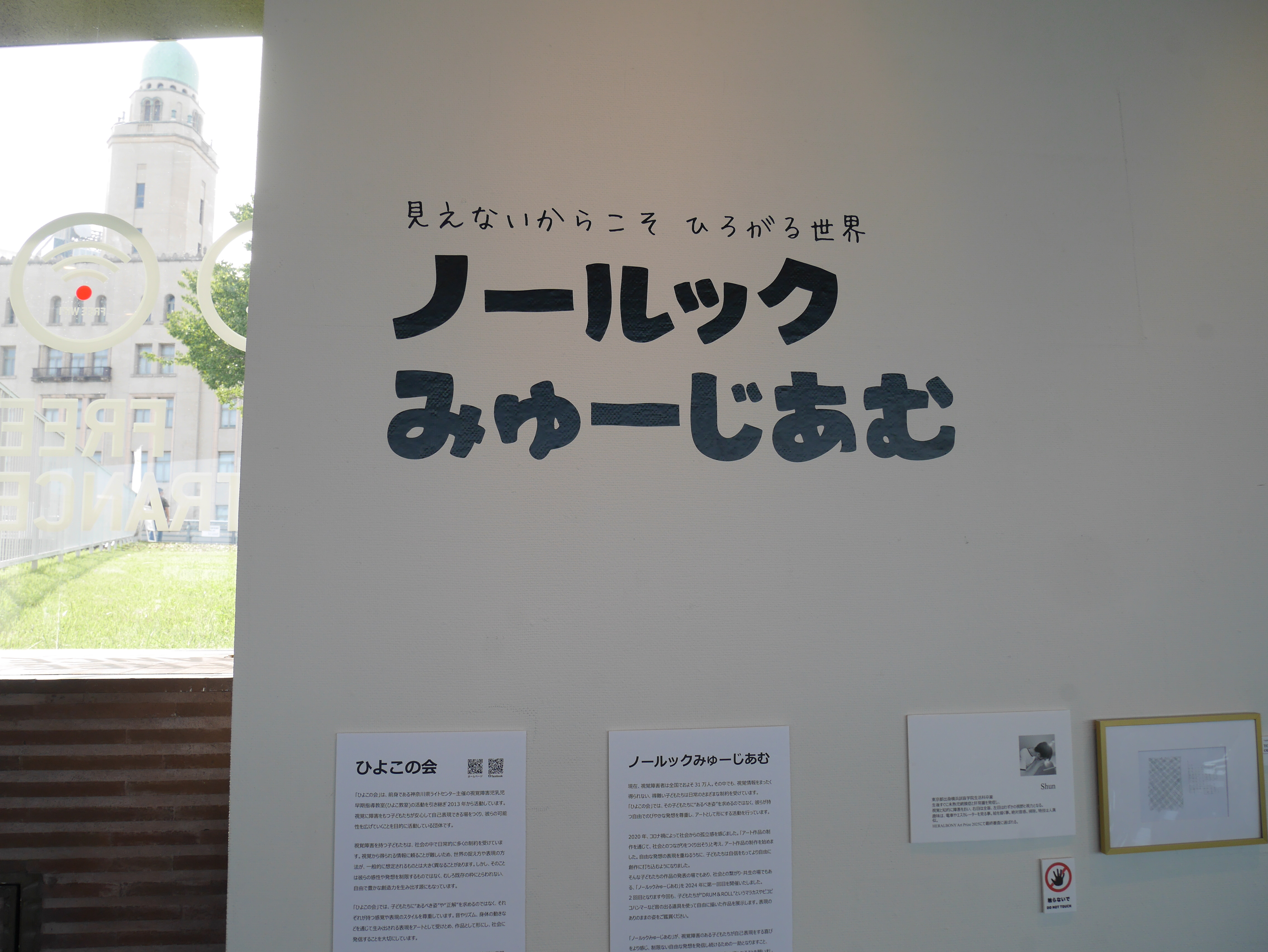
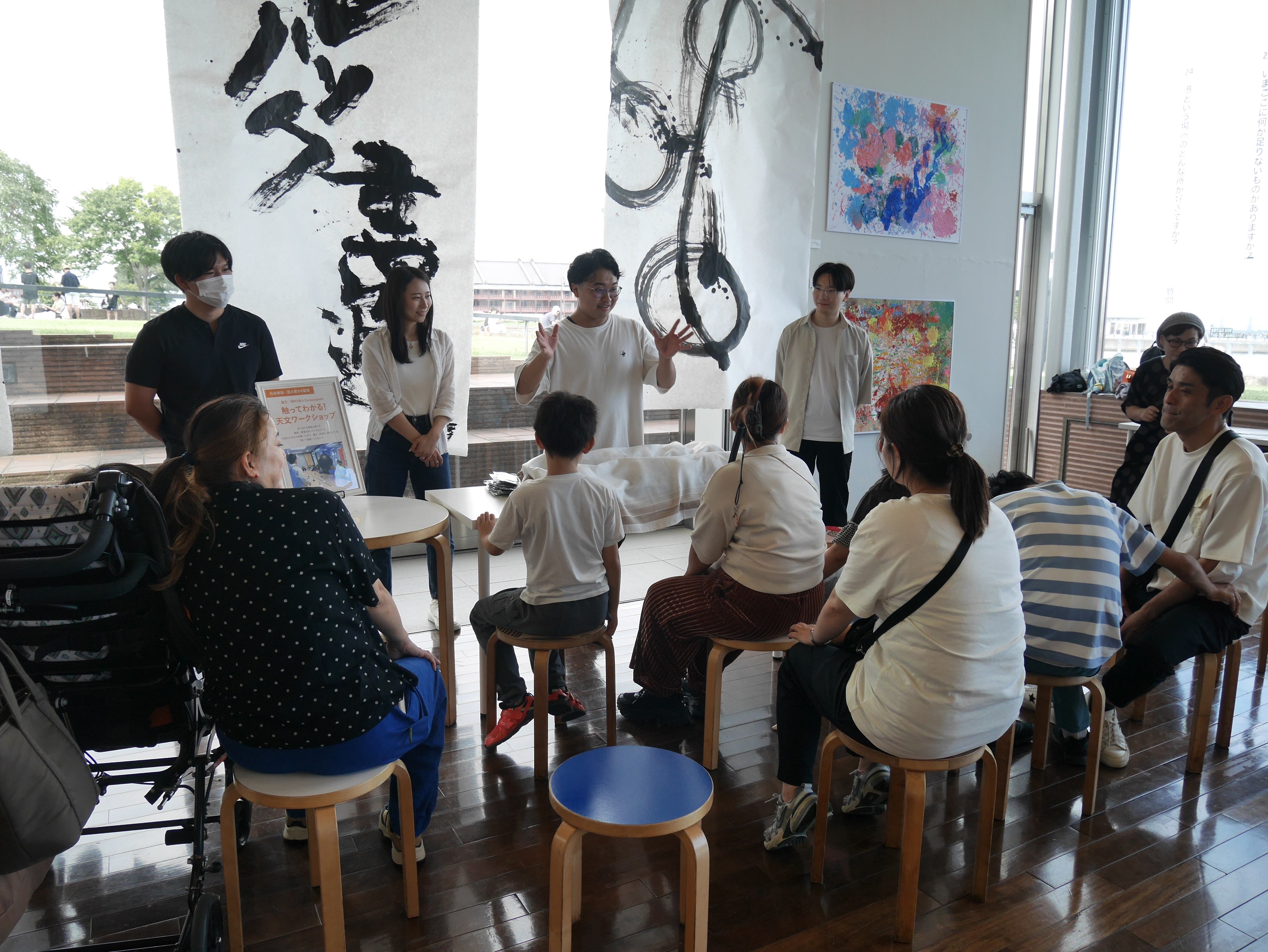
On October 5, 2025, near Yokohama's Red Brick Warehouse (around Zou-no-hana Park and Zou-no-hana Terrace), Curascopium ran a workshop on feeling the universe through touch, as part of the "No-Look Museum," an event for enjoying works without relying on sight. The event was organized by the volunteer group Hiyoko no Kai, with Curascopium taking part as an exhibitor and co-host. Visually impaired and sighted visitors mingled naturally, creating an inclusive space for appreciation and dialogue.
What changes when we let go of "seeing"?
The aim of this workshop was not to deliver astronomy knowledge one-way.
Touch without using your eyes, put it into words, and convey it to someone else. Through that process, participants re-grasped the universe through their own senses and learned from one another in dialogue.
Because everyone follows the same rules regardless of sight, the mood was less "teaching and being taught" than bringing each other's expressions to the table — a place for dialogue through the senses, beyond disability.
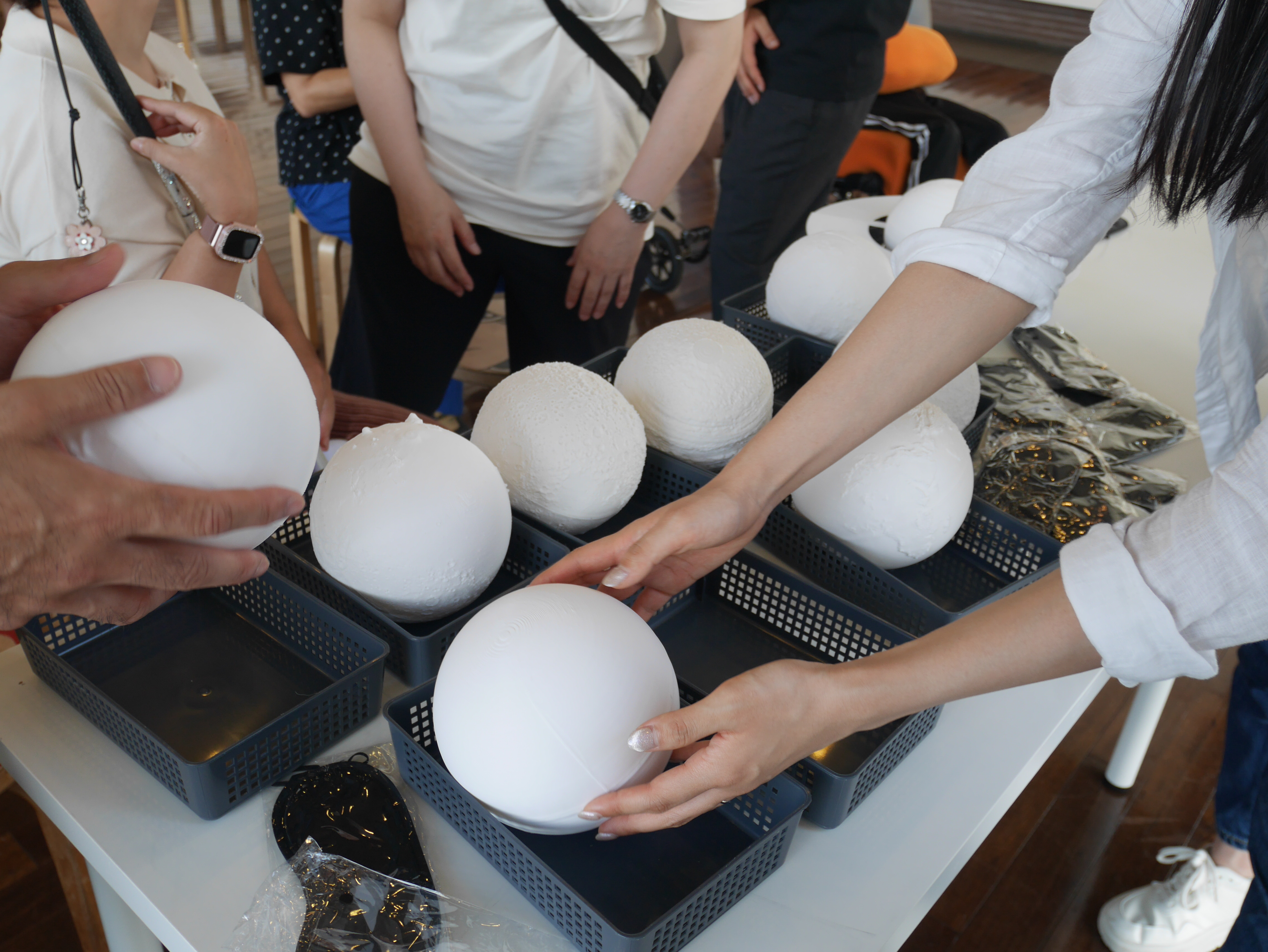
Touch, describe, and guess the planet
We prepared 3D planet models and braille and tactile-graphic materials (tactile constellation charts, planispheres, constellation cards) for an experience centered on touch.
The core of the workshop was verbalizing the features you feel.
Participants described textures in words — mixing in metaphors and feelings — and their partner used those words to pick out the planet, creating a back-and-forth between touch and language. Expressions varied greatly from person to person, and that was exactly where the fun was.
Survey responses included:
- "Each planet felt completely different — fascinating."
- "Touching the Earth was fun. More fun than seeing it flat."
- "I realized how much the describer's information and clarity matter."
- "Everyone expresses things differently, and that's interesting."
Putting touch into words is not easy. Many answered that it was "difficult" or "very difficult," and younger children sometimes struggled to stay focused. Yet that very difficulty became a doorway to stepping away from fixed ideas and noticing the diversity of others' expressions.
Outcomes and lessons from the survey
Reactions were largely positive: every participant answered that they enjoyed it, and about 90% said they felt the value of doing it with people in different positions. The structure — where differences in sight become a trigger for dialogue rather than division — held up to a real degree.
Areas for improvement also became clear:
- age-appropriate experience design (for elementary schoolers, an introductory version that ends with the joy of touching)
- time allocation between introduction and practice
- tools to support verbalization (cards, example phrases, audio support, etc.)
- stronger documentation and analysis (keeping results in research-ready form)
Next: taking "the universe you describe by touch" nationwide
Building on these results, Curascopium will redesign the program by age group: a touch-centered introductory version for elementary schoolers, and an inquiry version centered on verbal description for teens and adults. We will also strengthen ties with schools, science museums, and community events, with classroom adoption and traveling events in view.
Space experiences that do not depend on visual information can spread well beyond special needs education, into general education and cultural appreciation. This event clearly demonstrated that potential.
Want to know more? (Proposal and report)
A project proposal and implementation report are available (in Japanese), covering objectives, materials, operations, session flow, survey analysis, outcomes, and challenges.
If you are considering introducing a similar class or workshop, please have a look — and do get in touch.